American Indian & Alaska Native Tribes

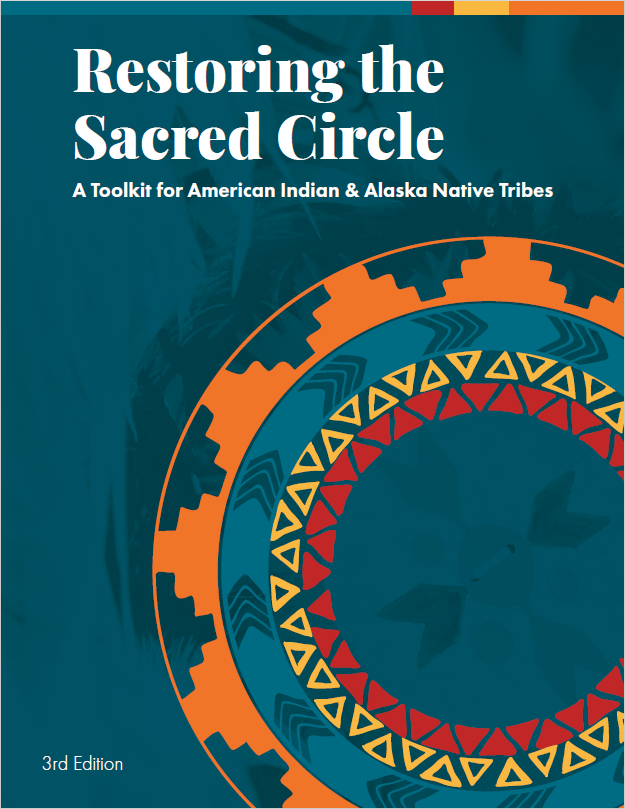
The Restoring the Sacred Circle Toolkit is designed to support healthy development of youth in Indian Country.

Understanding Problematic Sexual Behavior in American Indian and Alaska Native Youth:

Problematic Sexual Behavior (PSB) is a set of behaviors that are developmentally inappropriate, potentially harmful to self or others, and could be illegal depending on a variety of factors. Understanding problematic sexual behavior is a first step in the prevention of PSB of youth, promotion of healthy sexual development, and healing of those impacted. While resources providing relevant services to address PSB among dominant society youth are readily available, this information is lacking for Native families and children. 

Our hope is that this toolkit restores the Sacred Circle in tribal communities and provides much-needed resources to care for the sacred.  


Download the Restoring the Sacred Circle Toolkit.


test


Youth need safety, supervision, protection guidance, monitoring and teachings. All youth must know they are connected, sacred, and honored.

Much of Native culture is based on the Circle of Life. Culture teaches us that we are all relatives to all things in creation. Some threads in the Sacred Circle have become broken. Addressing Trauma, abuse, and neglect in tribal communities is necessary for understanding problematic sexual behavior (PSB). Trauma-informed principles can help support all youth. 

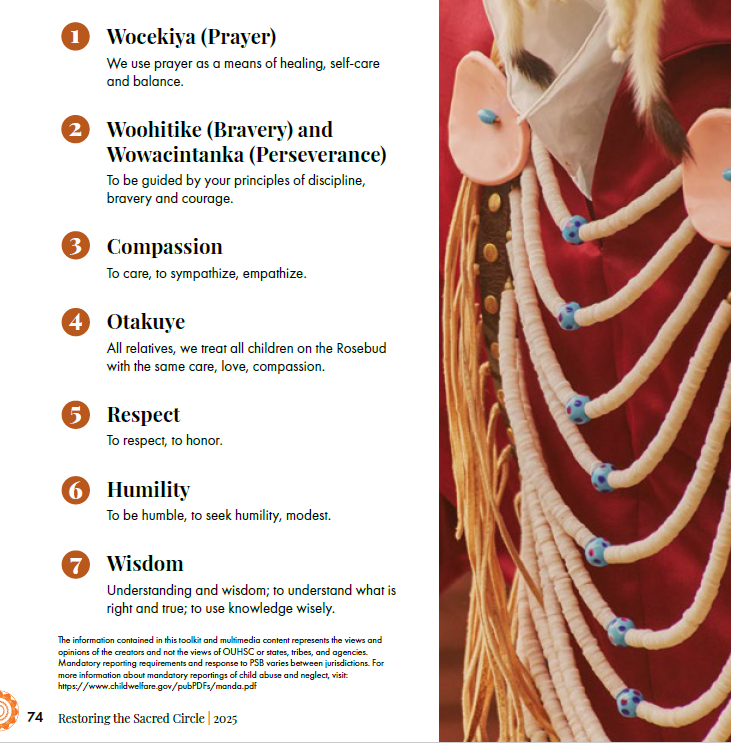
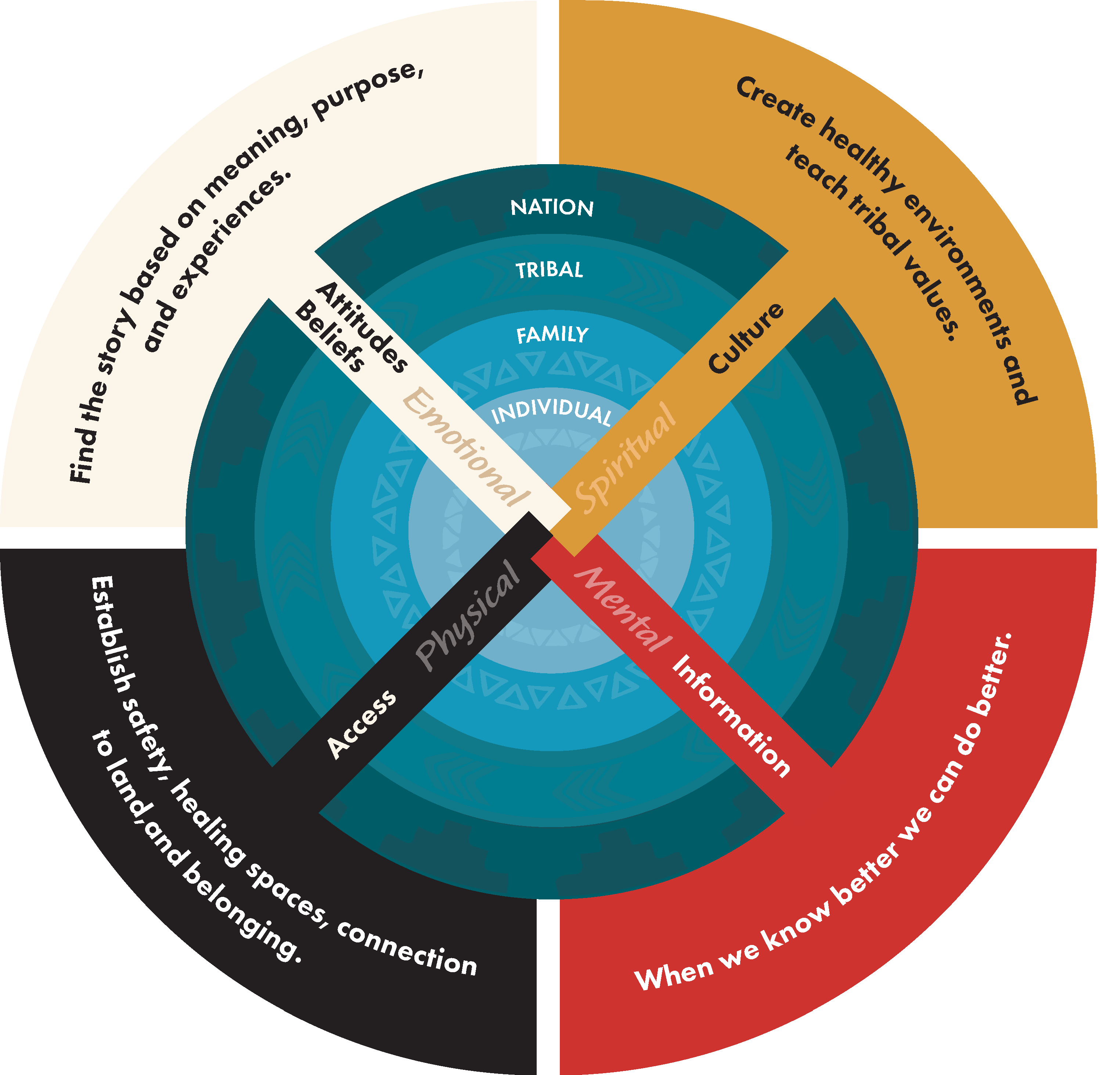
The Sacred Circle refers to the balance of mind, body, spirit and emotional/relational aspects of life. The history of colonization, boarding schools, trauma, violence and abuse has created an imbalance in the Sacred Circle.

We use teachings from the socioecological perspective to explore the layers of the circles that prevent PSB and keep the circle sacred. Sacred circle teachings are based on the universal health of all our relations. Healing the spirit begins at the individual level. We must work on our own spiritual wellness and sacredness before we create sacred families, communities, or nations. The Sacred Circle is infinite, the healing of one is the healing of all.

Our intentions and hopes are that this toolkit:

  • Promotes healthy sexual development and understanding of the continuum of sexual behavior  
  •  
  • Increases understanding about research on PSB  
  •   
  • Educates readers on the risk and protective factors associated with PSB  
  •   
  • Presents barriers and strategies to address PSB using existing resources and tribal knowledge  
  •   
  • Outlines systems and jurisdictional issues related to tracking PSB and referrals  
  •   
  • Shares local laws and policies about PSB  
  •   
  • Dispels misconceptions related to PSB and addresses stigma and bias  
  •   
  • Educates programs, schools, law enforcement, parents, multi-disciplinary teams and two-spirit youth with factsheets, resources, and protocols 

"We have a collective responsibility to learn and act in a way that will eradicate the trauma that leads to and influences our children to act out. As tribal nations, we are responsible to lead and protect our most precious sacred gift, our next generations." 

                                                                                               – Janet Routzen, 2020 

                                                                                                                           Associate Judge Rosebud Sioux Tribe

Preventing PSB Using the Sacred Circle Model

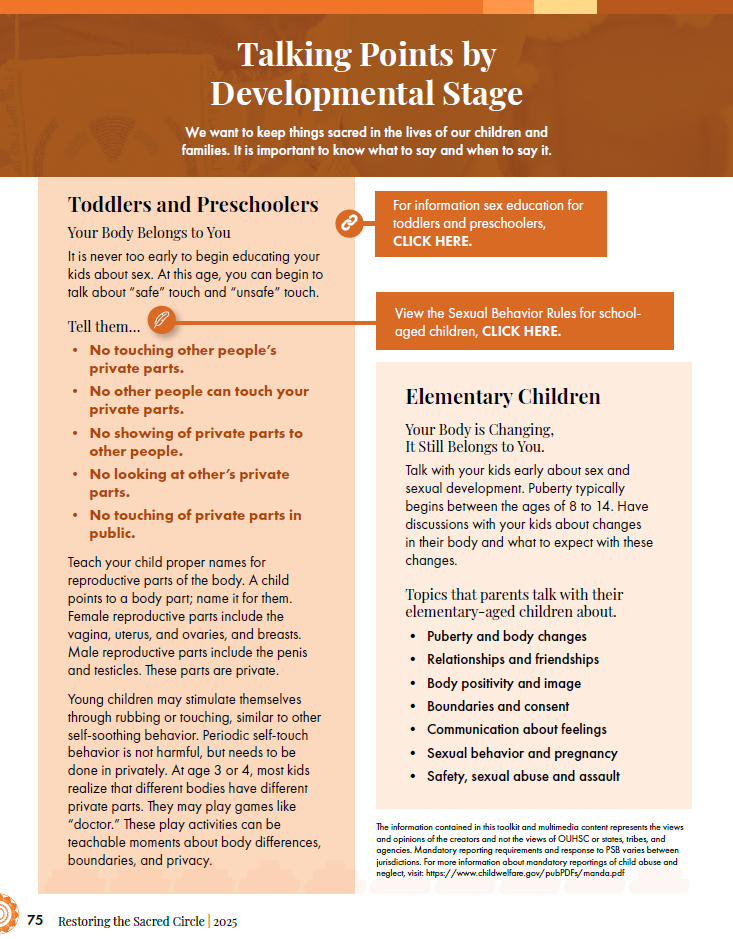
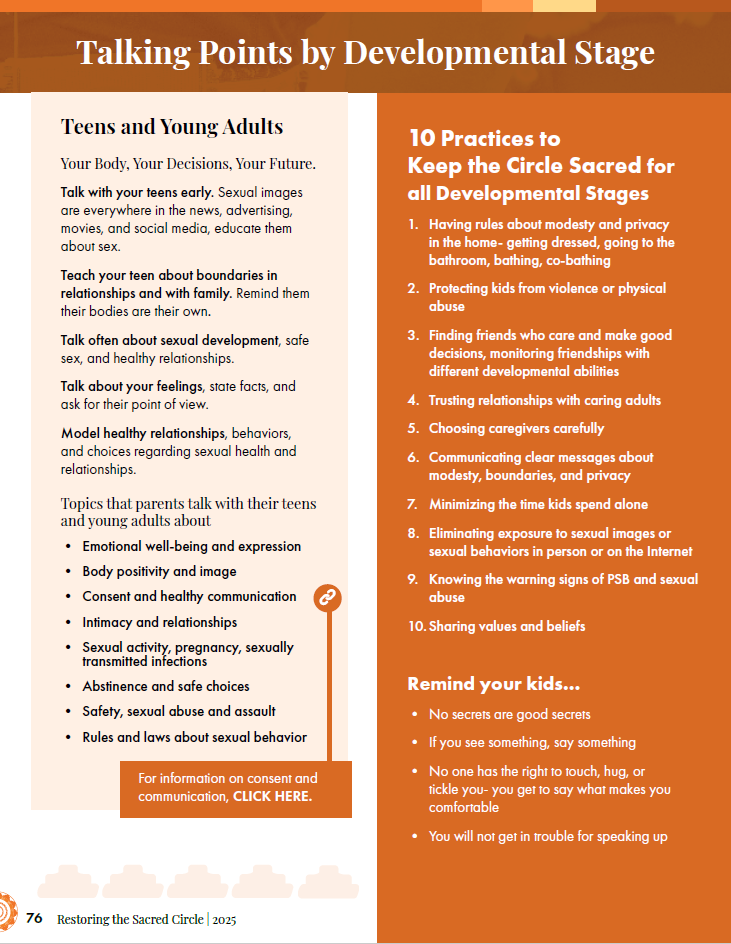
You can prevent PSB. Talk to your child about their body, body parts, personal space and privacy in a manner that fits your child's development. Start early and have the conversations often. 

This factsheet provides talking points for parents of toddlers, preschoolers, elementary children, and teens, view our fact sheet here.

This factsheet provides information preventing problematic sexual behavior, sexual development, and how to get help, view our fact sheet here (located in pg. 102 of the Restoring the Sacred Circle Toolkit)

When youth receive evidence-based interventions, their risk of future illegal sexual behavior is extremely low, with recidivism rates around 3-5%.

Professionals working in law enforcement can help mend the Circle by understanding their roles in the response to youth with PSB. To learn more, view our fact sheet here (located in pg. 88 of the Restoring the Sacred Circle Toolkit)

The juvenile justice system addresses youth who have failed to follow required laws and policies. Often, child protective services (CPS) work with juvenile justice to provide services for youth with PSB and their victims. Juvenile justice and courts can help mend the Circle by understanding the needs of youth and their families.

To learn more, view our fact sheet here (located in pg. 92 of the Restoring the Sacred Circle Toolkit)

Traditional practices and ceremonies can facilitate resilience and protective factors in families. Health providers in tribal communities play important roles in identifying and providing culturally congruent effective treatment for youth with PSB, child victims and their families. 

Addressing trauma, abuse, and neglect in tribal communities is necessary for understanding PSB. Trauma-informed principles can help us support all youth. 

To learn more, view our fact sheet here (located in pg. 96 of the Restoring the Sacred Circle Toolkit)

School teachers, counselors and staff help ensure the safety, health and well-being of students. As mandatory reporters, school staff may identify students with PSB and child victims.

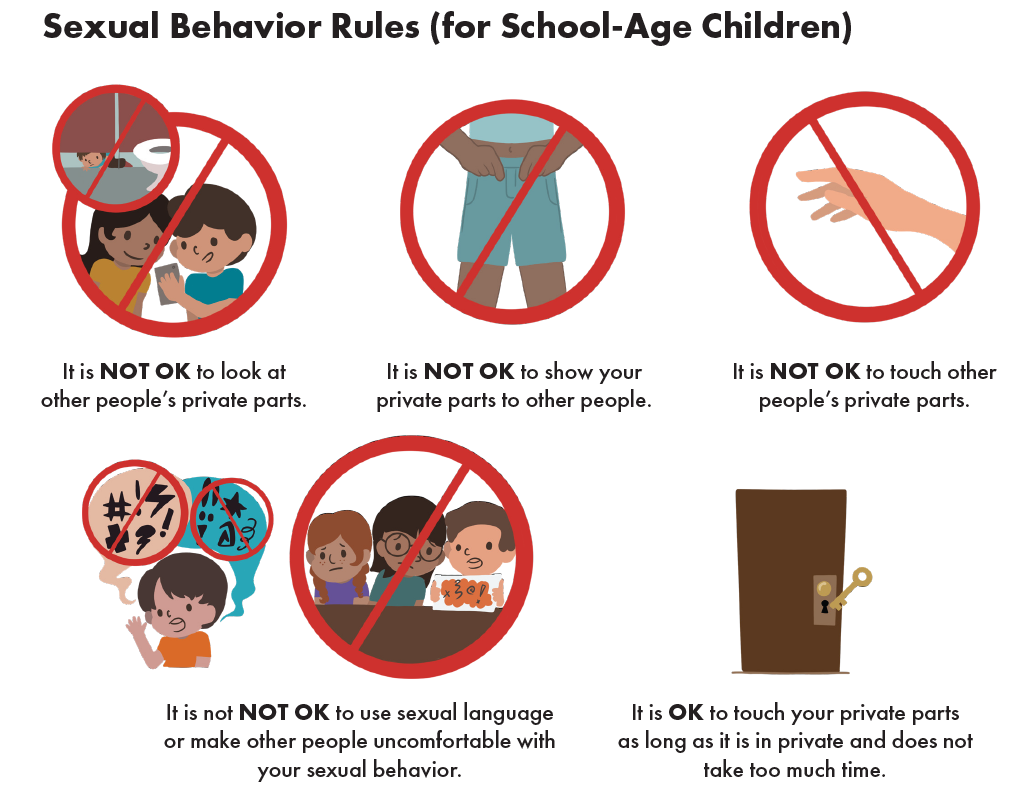
Teachers can help mend the Circle by understanding sexual development and PSB, Private Part Rules and Reflective Exercises

To learn more, view our fact sheet here (located in pg. 107 of the Restoring the Sacred Circle Toolkit)

MDTs are a group of professionals who collaborate to respond to reports of child abuse, neglect, and PSB of youth. Some MDTs are associated with children's advocacy centers. Often MDT members include tribal program staff, law enforcement, child protective services, clinicians, school staff, prosecutors and members of other agencies. 

Key elements of successful tribal MDTs are community ownership and involvement, resources to support the team functions, integration of tribal culture and tradition in team process and decision making, development of clear protocols, participation and commitment of MDT members, adequate training and support, confidentiality, and individual member and team accountability. 

To learn more, view our fact sheet here (located in pg.112 of the Restoring the Sacred Circle Toolkit)
Understanding Problematic Sexual Behavior in American Indian and Alaska Native Youth:

Section 2 of Restoring the Sacred Circle Toolkit (pg. 23 - 54) connects the sacred teachings of American Indian and Alaska Native families and acknowledges the abuse that occurred within tribal communities and families that contributed to PSB and trauma. 

Readers are reminded that Native cultures are cultures of honor, and children and families are the center of the Sacred Circle. Implementing the sacred involves addressing and healing from trauma, understanding how to talk about PSB and recognize bias and stigma, research related to PSB, and traditional views about sexual behaviors in Native communities. 

The goal of implementing the Sacred Circle is to empower readers to use this information to train and help others in their communities. 

Children with PSB should be viewed first as children.6 Sexual development in children is a normal part of the development process. Sexual behaviors in children range from normative to cautionary, to problematic and harmful. PSB of children is often misunderstood. The process of growing up and forming healthy, intimate relationships starts in early childhood, continuing throughout adolescence into adulthood.

A good foundation in understanding typical sexual development is essential for accurately deciding where a sexual behavior falls on the continuum from typical to concerning to problematic or harmful.

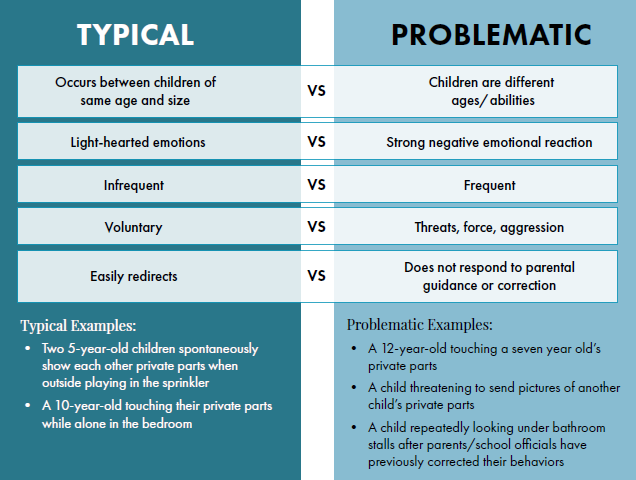
Typical sexual behavior occurs among children who are around the same age, size, and development. It is curiosity-driven, spontaneous, and infrequent. Problematic sexual behavior is a set of behaviors that are developmentally inappropriate, potentially harmful to self or others, and potentially illegal.

Typical vs Problematic Behaviors Graphic

For more information on typical and problematic sexual behaviors, see page 28 in the Restoring the Sacred Circle Toolkit. 

Much of what is known about PSB in the general population comes from published research and clinical practice. There is no specific body of research on PSB in American Indian or Alaska Native communities. Below are a few examples of general population facts: 

  • - PSB is not related to race or ethnicity.  

  • - There is no research to indicate that American Indian youth have higher rates of PSB than non-American Indian youth.  

  • - Youth in the general population commit more than 26% of all sex offenses and more than 36% of sex offenses are against youth victims.  

  • - Youth who exhibit inappropriate sexual behavior and receive early intervention services are less likely to have future incidents.  

  • - Treatment services for youth with PSB should also directly involve parents and/or guardians. A child’s ability to recover is influenced by the support he or she receives from caregivers. Caregiver support is critical for recovery. 

For more information on what we know about youth and PSB, see page 31 in the Restoring the Sacred Circle Toolkit. 

Community Challenges & Solutions  

  • Challenge:  Youth with PSB is a concern of community members, yet agencies often have no clear guidelines for response.  

  • Solution:  Frequent community outreach to educate community members and dispel misunderstandings about sexual development and PSB of youth. Strengthen partnerships with local schools and engage parents. Advocate for quality screening, assessment and interventions for PSB in community. 

  •  

Capacity Challenges & Solutions  

  • Challenge:  Tribes may not be equipped to handle PSB cases due to jurisdictional issues, lack of expertise and other necessary resources. Mental health services, children’s advocacy centers, or forensic interviews are not available in many tribal communities.  

  • Solution:  Utilize existing training models, map processes for referral and treatment, collaborate with programs, and connect families to healers and traditional rites of passage that support healing. Consider building on the systems of care model or other strengths, resources and leaders in the community. For examples of systems of care, click this link. 

  •  

Gaps and Protocol Challenges & Solutions  

  • Challenge:  Gaps in protocols exist across the country, recognizing that in tribal communities these gaps are often magnified because of unclear jurisdictional issues. Determining jurisdiction can be difficult, especially in cases of concurrent jurisdiction involving tribal, state and federal law enforcement.  

  • Solution:  Consider changing laws and agency/interagency policies, protocols and procedures to be developmentally appropriate and support prevention, identification, and response and treatment strategies for families of youth with PSB and child victims. Develop a taskforce or workgroup focused on community change to address PSB of youth with agency/system leadership representatives to outline protocols.  

  •  

Access to Evidence-Based Treatment Challenges & Solutions: 

  • Challenge:  Treatment that honors, respects, and integrates Tribal and community practices is needed for youth with PSB, child victims, caregivers, and other family members affected. Many tribal communities do not have access to treatment due to funding, limited number of qualified clinicians and rural locations 

  • Solution:  Increase the number of providers trained to recognize and treat youth with PSB, child victims and families. Utilize existing treatment resources, CACs and traditional healers. The impact of trauma needs to be integrated into the treatment approach and should include family members 


For more information regarding overcoming challenges in tribal communities, see page 50 in the Restoring the Sacred Circle Toolkit. 

Problematic Sexual Behavior-Cognitive Behavior Therapy (PSBCBT) has demonstrated long-term positive results for youth with PSB. Trauma-focused CBT (TF-CBT) is also effective when youth with PSB have significant trauma history and symptoms. Other options to consider are: 


Honoring Children, Respectful Ways Teaching from Indian Country 

  • Tribes can use the Honoring Children, Respectful Ways curriculum. This is the tribal enhancement of the Problematic Sexual Behavior– Cognitive Behavior Treatment (PSB-CBT) for American Indian and Alaska Native children. PSB-CBT is a treatment program for children between the ages of 3 and 12 with PSB, with the underlying philosophy that children have the capacity to make safe decisions and develop healthy relationships with the support of their caregivers. View the Honoring Children, Respectful Ways factsheet, here

Good Lives Model Teaching from Indian Country 

  • The Good Lives Model (GLM) is a strength based appropriate and responsive model used in Indian Country and beyond with the treatment of youth with PSB. It is based on the concept of Human Goods and has been used for more than 20 years with youth who have engaged in sexually abusive behaviors and is based on the underlying assumption that all individuals have similar basic needs and aspirations that they strive for in their lives. The GLM involves combining ways to live more fulfilling lives with understanding and managing individual risks.  

  •  

For more information on how treatment services and practices for the sacred circle, view the Implementation Guide for Mental Health Providers. Additionally, see page 40 in the Restoring the Sacred Circle Toolkit. 

Traditional Teachings of the Sacred Circle

The National Symposium on the Sexual Behavior of Youth hosted a Youth Partnership Board Youth Panel question and answer panel session. In this session, tribal experts discussed the traditional teachings and perspectives to prevent PSB and restore the Sacred Circle.

Talking Points by Developmental Stage

We want to keep things sacred in the lives of our children and families. It is important to know what to say and when to say it.

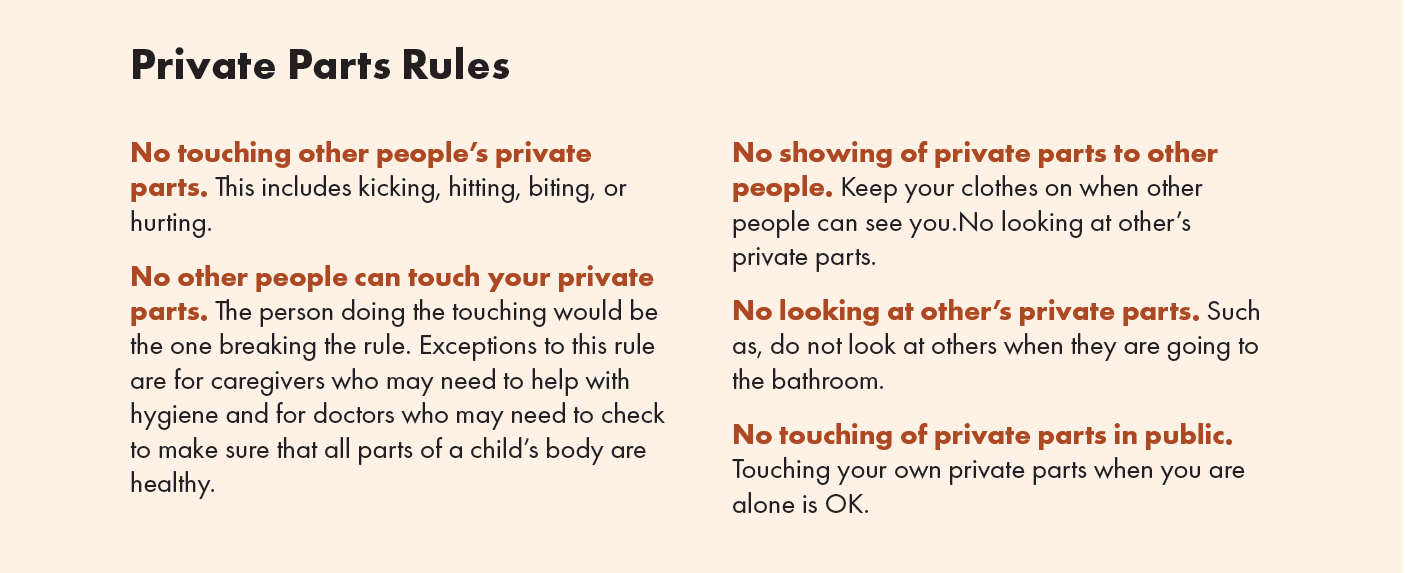
#1 Keep eyes away from others’ private parts
#2 Keep private parts covered
#3 Keep hands away from private parts
 

We acknowledge the NCSBY Caregiver Partnership Board for their words and wisdom. Understanding sexual behaviors: Children and youth exhibit a range of sexual behavior from typical to concerning to problematic to illegal. Typical sexual behavior tends to be exploratory, occurs spontaneously between similar aged peers who are functioning at the same level, responds to intervention, and is not associated with strong emotions. When sexual behaviors are problematic (children are of different ages and abilities, strong negative emotional reactions, frequent or includes threats, force, or aggression), the behaviors may require specialized intervention.

Restoring the Sacred Circle Podcast

Visit our Restoring the Sacred Circle Podcast by clicking here

This podcast aims to promote understanding of Problematic Sexual Behavior (PSB), describe current research on PSB, outline the risk and protective factors, and support communities as they address PSB. Please check out our web site and download a free copy of the Tool Kit. 

Podcast Details

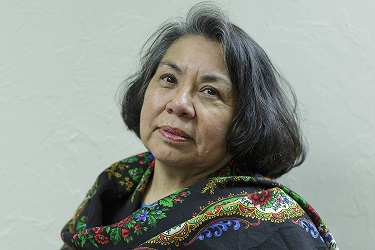
headshot, dr. bigfoot, scarf floral

Dolores Subia BigFoot, PhD., is a child psychologist by training who hold the Presidential Professorship within the Center on Child Abuse and Neglect at the University of Oklahoma Health Sciences Center. Since 1994, she has directed Project Making Medicine, a clinical training program to train mental health providers in the treatment of child maltreatment using culturally based teachings. In 2020 she was awarded the National Suicide Prevention Resource Center, providing training and technical assistance throughout the country on suicide prevention efforts. With the establishment of the Indian Country Child Trauma Center in 2004, she was instrumental in the cultural adaptations of evidenced-based child treatment protocols. Under her guidance, four Evidenced Based Treatments were enhanced for American Indian and Alaska Native families in Indian Country, titled the Honoring Children Series. One of the four treatment models is Honoring Children – Mending the Circle, a cultural enhancement of Trauma Focused Cognitive Behavior Therapy, for use with American Indian and Alaska Native children and their families. Dr. BigFoot is a member of the national TF-CBT Trainer Network.

 Honoring Children, Honoring the Future is a suicide prevention toolkit.

She has over 15 published articles and chapters, including serving as the lead author of the recent publication, Adapting Evidence- Based Treatments for Use with American Indians and Native Alaskan Children and Youth. Dr. BigFoot has served as PI on sixteen federally funded projects. She currently serves on the federal Commission on Native Children, whose mission is to make recommendations to improve conditions affecting American Indian, Alaska Native, and Native Hawaiian children and their families. Dr. BigFoot has over 30 years of experience and is knowledgeable about the concerns of implementation and adaptation of evidenced based practices being introduced into Indian Country. Dr. BigFoot is an enrolled member of the Caddo Nation of Oklahoma with affiliation to the Northern Cheyenne Tribe of Montana where her children are enrolled members and the recognition that her children were raised in the Cheyenne traditions and ceremonies. Equity, inclusion, cultural identity, and belonging are values she promotes and practices. She values her role as mother, grandmother, sister, daughter, auntie and mentor as being her calling and the pathway that brings others into the circles of cultural teachings. Her faith sustains her as she is a disciple of Christ. She was the wife of the late Cheyenne Chief and tribal historian John L. Sipe Jr. and the mother of C. Ah-in-nist Sipes and his siblings.

A

Kaycee Martinez is an enrolled member of the Northern Cheyenne Tribe and a mom of four children. She is the Family Spirit Program Director at the Boys and Girls Club of the Northern Cheyenne. In this podcast, Kaycee reflects on her work at the Club and how PSB impacts children and youth in the community. 

S

Dewey Ertz is an enrolled member of the Cheyenne River Sioux Tribe in north central South Dakota. In this podcast he reflects on his work with youth, families, and addressing PSB. This podcast includes 6 chapters with several topics about treating youth and families with PSB Indian country. 

S

Healer Phil Stevens (Dine') works with youth and families on the Wind River Reservation and Doya Natsu Healing Center. In this podcast Phil talks about his life growing up on the Navajo Nation and the powerful influence of his grandmother who was born in the 1800s. Phil's stories about grief, lost, spirituality, and prayer are part of the sacred circle each of us keep. 

A

Aunties and grandmothers have wisdom about the sacred circle. We met with four Native women to learn more about how they keep their circles sacred and prevent problematic sexual abuse. In this podcast, these women share their stories about their lives and families. They answer frequently asked questions based on their own experiences in tribal communities. 

Understanding Problematic Sexual Behavior in American Indian and Alaska Native Youth:

When youth receive evidence-based interventions, their risk of future illegal sexual behavior is extremely low, with recidivism rates around 3-5%.

Professionals working in law enforcement can help mend the Circle by understanding their roles in the response to youth with PSB. To learn more, view our fact sheet here

The juvenile justice system addresses youth who have failed to follow required laws and policies. Often, child protective services (CPS) work with juvenile justice to provide services for youth with PSB and their victims. Juvenile justice and courts can help mend the Circle by understanding the needs of youth and their families.

To learn more, view our fact sheet here

Traditional practices and ceremonies can facilitate resilience and protective factors in families. Health providers in tribal communities play important roles in identifying and providing culturally congruent effective treatment for youth with PSB, child victims and their families. 

Addressing trauma, abuse, and neglect in tribal communities is necessary for understanding PSB. Trauma-informed principles can help us support all youth. 

To learn more, view our fact sheet here