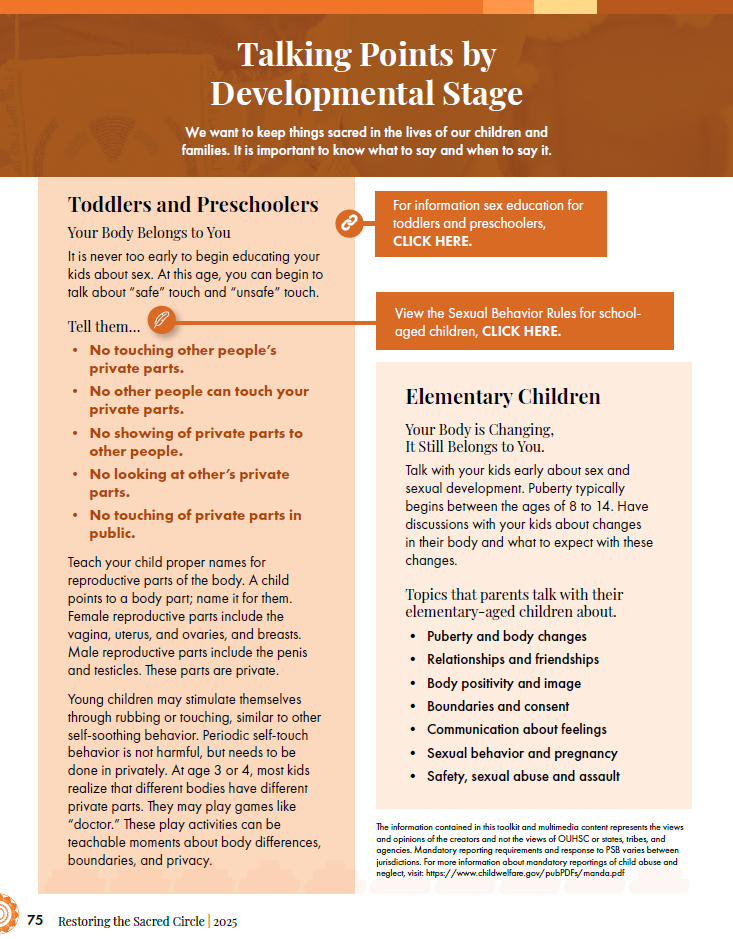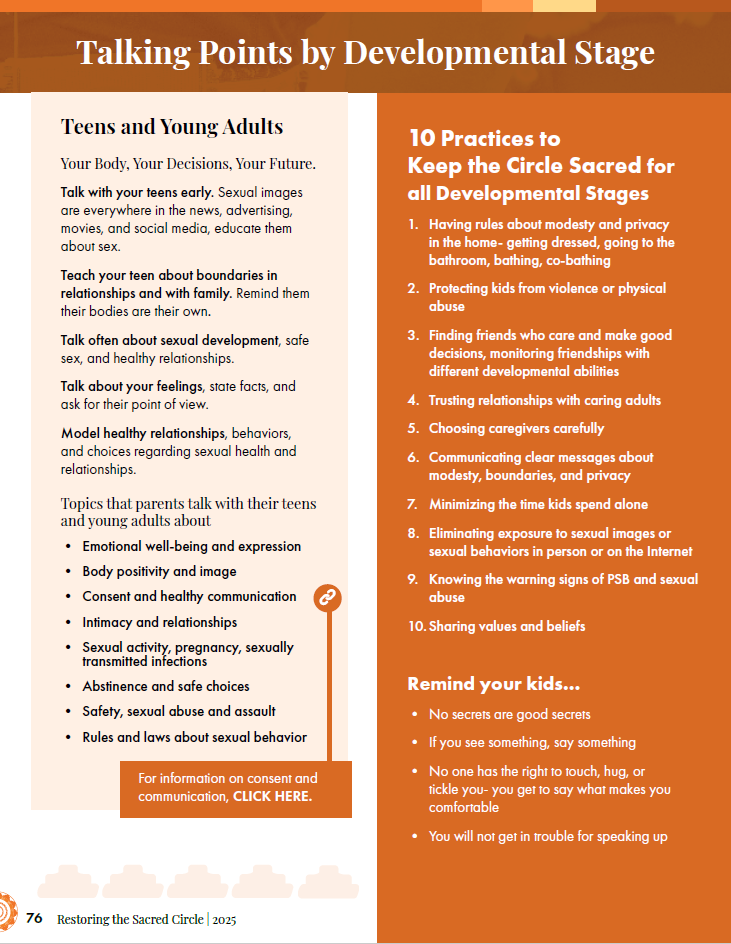

You can prevent PSB. Talk to your child about their body, body parts, personal space and privacy in a manner that fits your child's development. Start early and have the conversations often.
This factsheet provides talking points for parents of toddlers, preschoolers, elementary children, and teens, view our fact sheet here.
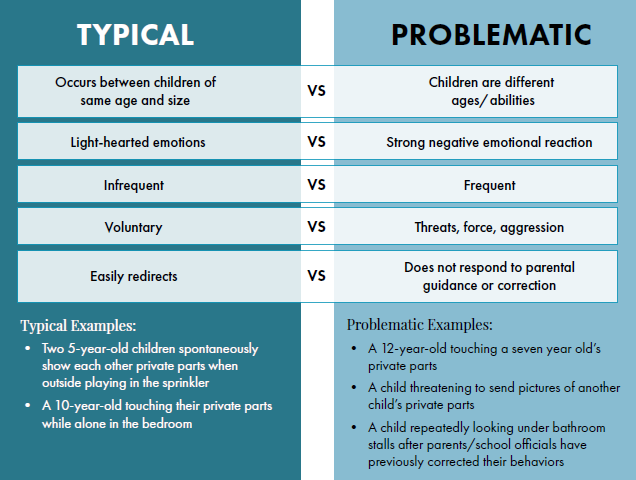
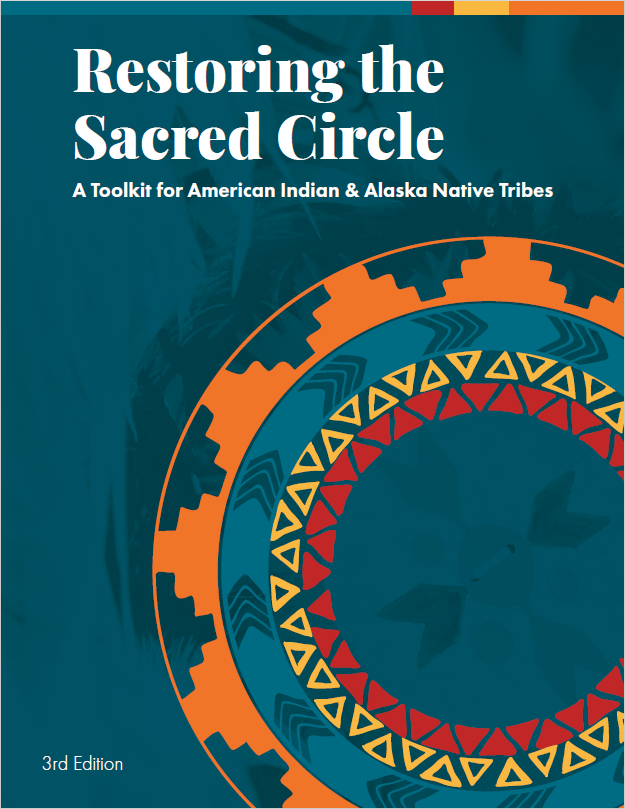
This factsheet provides information preventing problematic sexual behavior, sexual development, and how to get help, view our fact sheet here (located in pg. 102 of the Restoring the Sacred Circle Toolkit)
When youth receive evidence-based interventions, their risk of future illegal sexual behavior is extremely low, with recidivism rates around 3-5%.
Professionals working in law enforcement can help mend the Circle by understanding their roles in the response to youth with PSB. To learn more, view our fact sheet here (located in pg. 88 of the Restoring the Sacred Circle Toolkit)
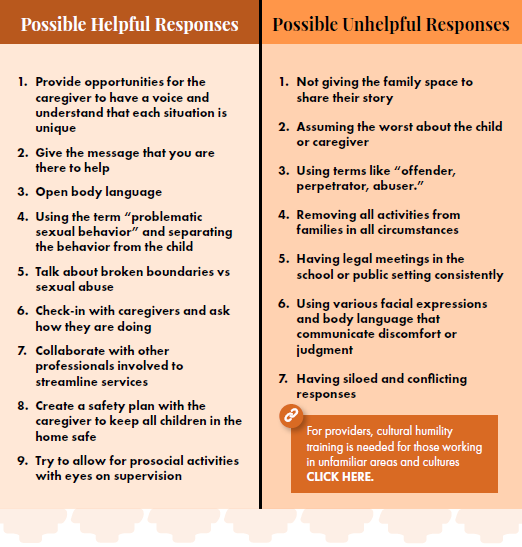
The juvenile justice system addresses youth who have failed to follow required laws and policies. Often, child protective services (CPS) work with juvenile justice to provide services for youth with PSB and their victims. Juvenile justice and courts can help mend the Circle by understanding the needs of youth and their families.
To learn more, view our fact sheet here (located in pg. 92 of the Restoring the Sacred Circle Toolkit)
Traditional practices and ceremonies can facilitate resilience and protective factors in families. Health providers in tribal communities play important roles in identifying and providing culturally congruent effective treatment for youth with PSB, child victims and their families.
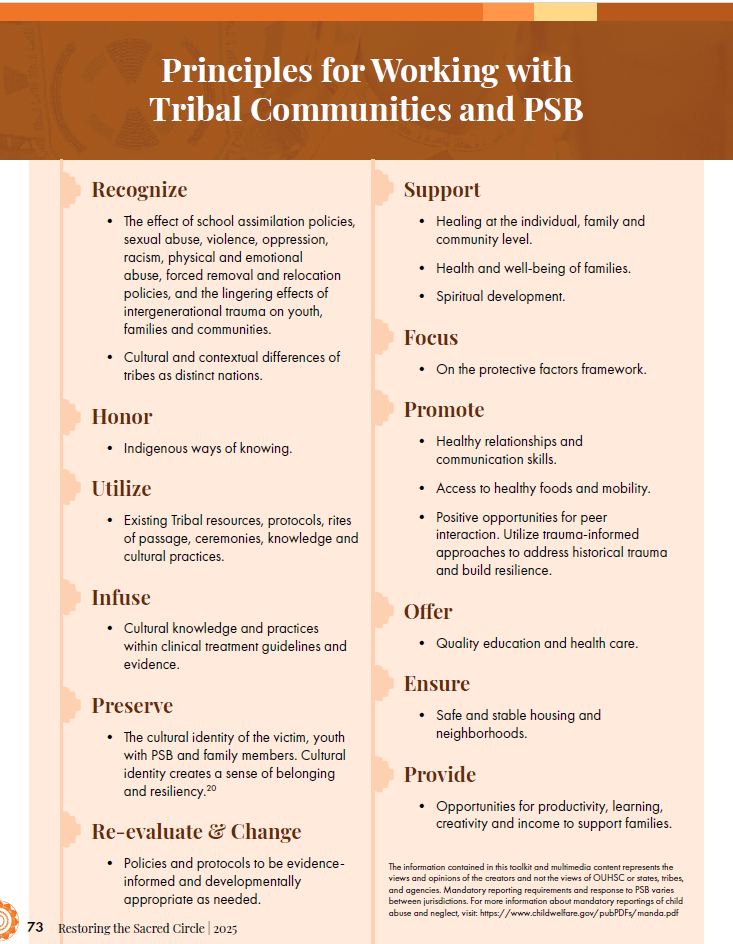
Addressing trauma, abuse, and neglect in tribal communities is necessary for understanding PSB. Trauma-informed principles can help us support all youth.
To learn more, view our fact sheet here (located in pg. 96 of the Restoring the Sacred Circle Toolkit)
School teachers, counselors and staff help ensure the safety, health and well-being of students. As mandatory reporters, school staff may identify students with PSB and child victims.
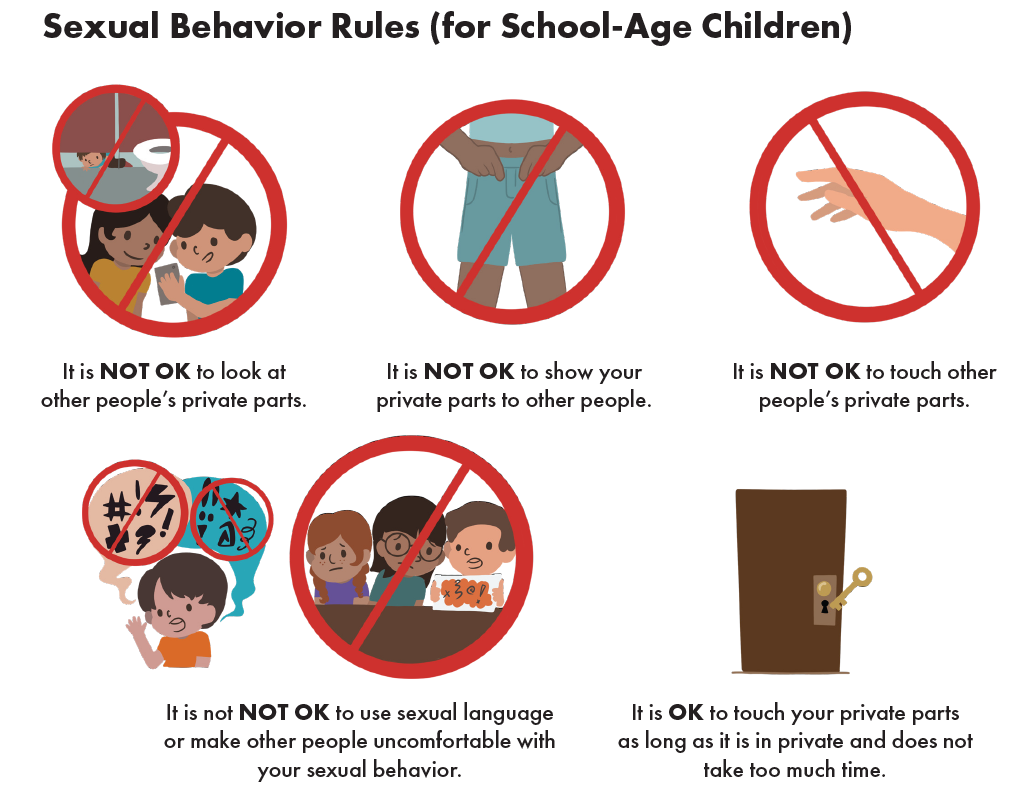
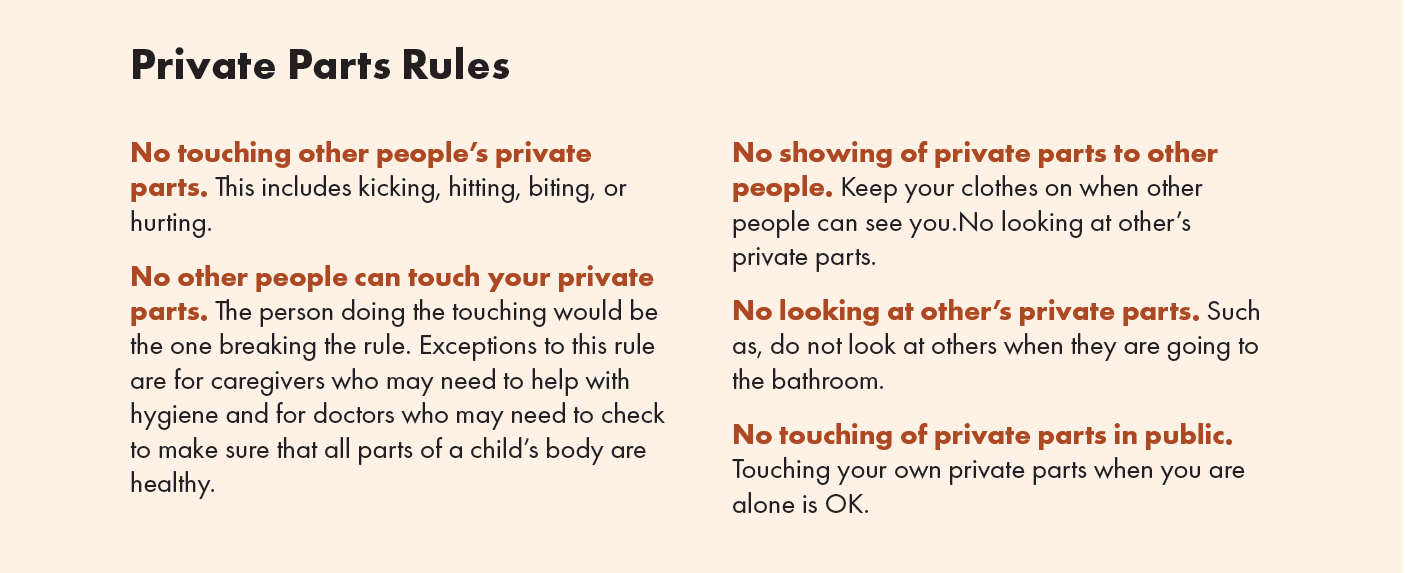
Teachers can help mend the Circle by understanding sexual development and PSB, Private Part Rules and Reflective Exercises.
To learn more, view our fact sheet here (located in pg. 107 of the Restoring the Sacred Circle Toolkit)
MDTs are a group of professionals who collaborate to respond to reports of child abuse, neglect, and PSB of youth. Some MDTs are associated with children's advocacy centers. Often MDT members include tribal program staff, law enforcement, child protective services, clinicians, school staff, prosecutors and members of other agencies.
Key elements of successful tribal MDTs are community ownership and involvement, resources to support the team functions, integration of tribal culture and tradition in team process and decision making, development of clear protocols, participation and commitment of MDT members, adequate training and support, confidentiality, and individual member and team accountability.
To learn more, view our fact sheet here (located in pg.112 of the Restoring the Sacred Circle Toolkit)